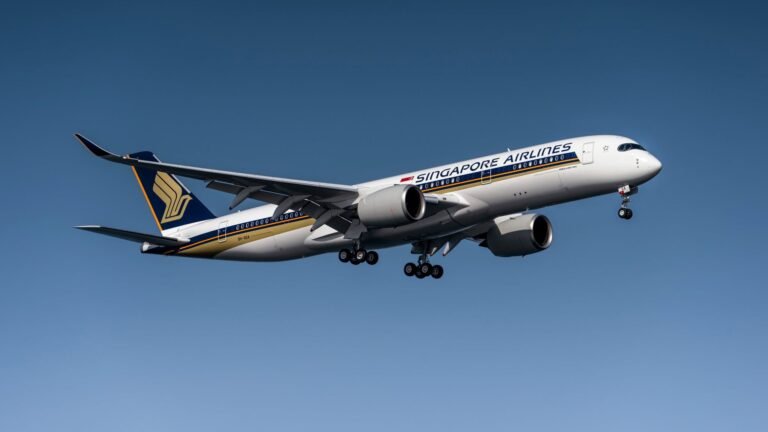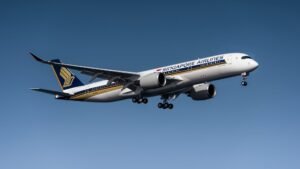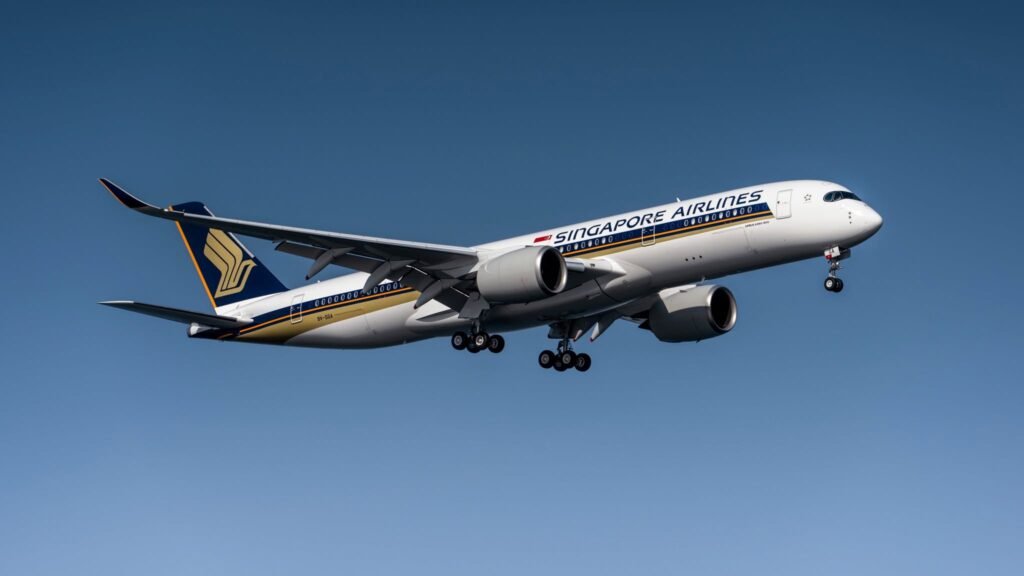
Singapore: Singapore Airlines (SIA) has signed a binding agreement to purchase up to 4,800 tonnes of next-generation sustainable aviation fuel (SAF) from Aether Beacon Pte Ltd over three years, with deliveries scheduled to begin in 2028. The agreement was signed on October 23 and publicly announced by the companies on October 28, making SIA the first airline to commit to purchasing fuel from Aether Fuels’ Project Beacon facility in Singapore. The deal also marks the airline’s first purchase of SAF produced using technology that converts waste-carbon feedstocks into aviation fuel.
The fuel will be produced at Project Beacon, a commercial production facility being developed at Aster’s refining complex on Pulau Bukom, Singapore. The project will use Aether Fuels’ proprietary Aurora technology to convert feedstocks such as biomethane and industrial waste gases into liquid aviation fuel. The agreement supports Singapore’s efforts to develop alternative, lower-carbon fuel production capabilities while providing Aether with a committed airline customer for its initial commercial facility.
The agreement centres on an alternative pathway for producing sustainable aviation fuel from carbon-containing waste rather than relying primarily on conventional biological oils and fats. Project Beacon will process feedstocks including biomethane and industrial waste gases using Aether’s Aurora technology, which builds on the Fischer–Tropsch process to convert waste-derived gases into liquid fuel suitable for aviation.
In simplified terms, the process takes carbon-containing gases and converts them into the chemical building blocks needed to produce liquid hydrocarbons. Those hydrocarbons can then be processed into aviation fuel. The approach offers a potential route to use waste-derived carbon that might otherwise be released into the atmosphere or handled through other waste-management processes.
This differs from the hydroprocessed esters and fatty acids (HEFA) pathway, which uses lipid-based feedstocks such as used cooking oil and animal fats. HEFA is an established route for SAF production, but supplies of suitable oils and fats are limited and are also sought by other industries. A waste-gas-based pathway could therefore broaden the range of feedstocks available to fuel producers and help diversify future SAF supply.
The fuel produced at Project Beacon is intended to be certified under the Carbon Offsetting and Reduction Scheme for International Aviation (CORSIA), the International Civil Aviation Organization’s framework for addressing international aviation emissions. Certification is important because SAF must meet applicable sustainability and emissions-accounting requirements to qualify under the scheme.
The environmental benefit will depend on the feedstock, production process, energy inputs and lifecycle emissions. The companies’ announcement identifies the technology and intended certification, but does not disclose a project-specific lifecycle emissions reduction figure for the fuel covered by this agreement.
Under the binding offtake agreement, SIA will purchase up to 4,800 tonnes of SAF over three years, with deliveries beginning in 2028. The announcement does not provide a detailed annual delivery schedule, a fixed minimum purchase volume or the financial value of the agreement.
The 4,800-tonne figure represents the maximum total quantity across the three-year term, not the volume to be purchased annually. The fuel will come from Project Beacon, which Aether is developing with energy and chemicals company Aster at its Pulau Bukom refining complex.
Project Beacon has previously been described as having the capacity to produce up to 2,000 tonnes of fuel annually, with commercial operations targeted for 2028. The facility’s output will serve as an initial step in Aether’s plan to establish larger-scale production.
By 2031, Aether intends to start up its first large-scale commercial plant, with production capacity at least ten times greater than Project Beacon. The company has presented this planned expansion as part of its strategy to increase the availability of next-generation SAF.
The October agreement does not specify the price per tonne, the total contract value, the precise delivery dates within each year or the proportion of SIA’s overall fuel requirements that this particular supply will cover.
The agreement follows a memorandum of understanding (MOU) signed by Singapore Airlines and Aether Fuels in 2025. At that stage, the partnership established a basis for cooperation on the development and future supply of SAF, but Project Beacon had not yet been announced.
Aether’s subsequent decision to establish its first commercial facility in Singapore, along with the development of partnerships across the local supply chain, provided the basis for the next stage of the relationship. The October 23, 2026, binding offtake agreement moves the arrangement beyond the earlier MOU by committing SIA to purchase fuel from the planned facility.
“When we signed our MOU with Singapore Airlines last year, Project Beacon had not yet been announced,” said Conor Madigan, co-founder and chief executive officer of Aether Fuels.
He said the company had since selected Singapore as the location for its first commercial facility and developed key partnerships across the local value chain.
Madigan described the binding agreement as “a strong signal of committed demand from a leading global airline,” adding that such collaboration was needed to establish the commercial conditions for scaling new SAF production pathways.
The distinction is significant for an emerging fuel technology. Developing a production process and building a facility are only part of the challenge; producers also need buyers willing to commit to purchasing the output. An airline offtake agreement provides a clearer indication of demand and can help support planning for commercial production. However, the agreement alone does not establish that the plant has begun commercial operations or that the full contracted volume has already been produced.
For SIA, the agreement is part of its broader effort to secure future SAF supplies and reduce the emissions associated with its operations. The airline group, which includes low-cost subsidiary Scoot, has set a target for SAF to account for 5% of its total fuel requirements by 2030, subject to global developments in fuel availability and adoption. SIA has also committed to achieving net-zero carbon emissions by 2050.
“Supporting the development and adoption of SAF, and securing future supplies, are integral to SIA’s ambition of achieving net zero carbon emissions by 2050,” said Lee Wen Fen, chief sustainability officer at Singapore Airlines.
She added that the purchase demonstrates demand for new lower-carbon fuel production pathways in Singapore.
SIA and Scoot previously announced plans in 2024 to purchase 1,000 tonnes of SAF produced by Neste in Singapore. The Aether agreement expands SIA’s engagement with a different production pathway, based on waste-carbon feedstocks rather than the lipid-based feedstocks associated with HEFA production.
The agreement does not mean that SIA will immediately use 4,800 tonnes of the new fuel across its network. Deliveries are scheduled to start in 2028, and the amount used in any particular period will depend on the delivery programme and the fuel’s integration into the airline’s operations.
Lee said the airline would continue working with partners worldwide to expand SAF production, strengthen the aviation industry’s sustainability ecosystem and support the transition towards more sustainable air travel.
Aether Fuels’ partnership with SIA also reflects its plans to develop a commercial SAF production business in Singapore. Project Beacon is being developed at an established refining complex, giving the project a location within Singapore’s wider energy and aviation infrastructure ecosystem.
Madigan pointed to Singapore’s refining and aviation infrastructure, investment support, sustainability policies and position as a global aviation hub as factors supporting the development of lower-carbon aviation fuels.
The company’s longer-term plan is to move beyond Project Beacon to a large-scale commercial plant targeted for 2031, with capacity at least ten times greater than the initial facility. The expansion remains a future plan, rather than a confirmation that the larger plant is already operational or that its output has been contracted.
For Singapore, the project adds another potential route for producing SAF locally. For the airline, the offtake agreement provides a commitment to a new supply source as it works towards its 2030 SAF target and 2050 net-zero ambition.
The next milestones will be the start of Project Beacon’s commercial operations, the commencement of deliveries to SIA in 2028 and Aether’s planned expansion towards large-scale production by 2031. The project’s actual output, fuel costs and lifecycle emissions performance will be important measures of whether this waste-carbon pathway can contribute meaningfully to aviation’s wider decarbonisation efforts.