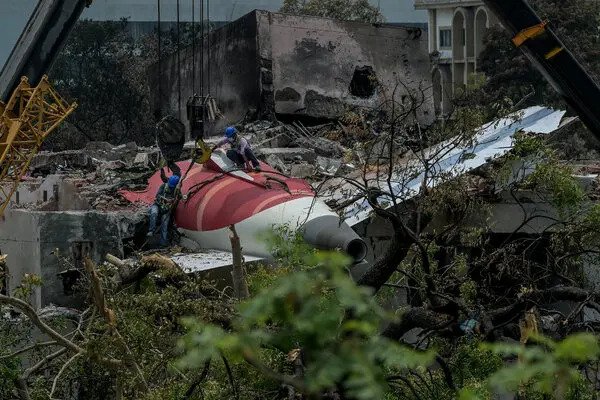
New Delhi, India: The investigation into the crash of Air India flight AI-171 has entered its final stages, with the government telling Parliament that an advanced examination of the aircraft’s fuel control switch and its locking mechanism found no abnormality. However, the inspection of the complete thrust control module remains underway at the original equipment manufacturer’s facility in Seattle.
Minister of State for Civil Aviation Murlidhar Mohol provided the update during the Monsoon Session of Parliament on Wednesday, July 29, 2026, in response to questions in the Rajya Sabha. According to the Ministry of Civil Aviation’s response, the tests were ordered by the Directorate General of Civil Aviation (DGCA) as part of continuing airworthiness checks after the Boeing 787 aircraft type was grounded in February this year.
“A detailed examination of the fuel control switch, including the structural integrity of its locking detents, found no abnormality,” Mohol said.
The government further stated: “Inspection of the complete Thrust Control Module at the OEM’s facility is underway.”
The finding is significant because the movement of the two engine fuel control switches has been a central focus of the investigation into the June 12, 2025 crash, which happened shortly after takeoff from Ahmedabad. The aircraft came down in the Meghani Nagar area, killing 260 people, including 241 of the 242 people aboard the aircraft and 19 people on the ground. One passenger survived the crash.
The preliminary investigation found that both switches moved from the RUN position to CUT OFF shortly after takeoff, resulting in the loss of thrust from both engines. The preliminary report, however, did not establish why the switches moved or assign responsibility for the movement.
The latest examination has so far found no abnormality in the locking mechanism of the fuel control switch. However, the government has not said that the investigation has established the cause of the switches moving to the CUTOFF position. The complete thrust control module is still being examined, and the outcome of that inspection remains awaited.
The government also rejected suggestions that the Aircraft Accident Investigation Bureau (AAIB) has delayed the final report into the crash. Mohol said investigations into major air accidents do not follow a fixed timeline and that the AI-171 inquiry is progressing in accordance with established investigation procedures.
“All probable causes and contributing factors leading to the accident are being investigated,” the minister said.
The Ministry of Civil Aviation said the final investigation report will contain the findings of the probe and will be made public and uploaded on the AAIB’s website once the investigation is completed.
The preliminary report also noted that the aircraft had been certified as airworthy before the flight and that its maintenance records did not show a reported defect involving the fuel control switches. It also recorded that the aircraft’s throttle control module had previously been replaced, although the replacements were unrelated to reported fuel-switch defects.
The investigation subsequently drew international attention because the fuel control switches are part of the Boeing 787’s thrust control system and are designed with locking mechanisms intended to prevent unintended movement. The latest government statement indicates that the structural integrity of the locking detents has now been examined and that no abnormality was identified in that specific component.
However, the government has not yet released a final conclusion on what caused the switches to move during the AI-171 flight. The continuing inspection of the complete thrust control module is therefore an important remaining part of the technical examination.
The Supreme Court has accepted a plea by Pushkar Raj Sabharwal, the father of late Air India AI-171 pilot Captain Sumeet Sabharwal, requesting that the AAIB’s final investigation report not be made public. During the hearing, the Centre informed the court that once the report is completed expected around October 2026 it will be submitted to the Supreme Court in a sealed cover, respecting the family’s concerns.
The petition was filed amid concerns that the preliminary report and subsequent media coverage had unfairly fuelled speculation about the pilot’s role in the June 12, 2025 Ahmedabad crash. The Supreme Court has previously observed that no blame can presently be attributed to the pilot, stressing that the investigation is still underway and no final conclusions have been reached.
The AAIB’s final report is expected to establish the complete sequence of events, identify the causes and contributing factors, and determine whether any safety recommendations are required. Until the final report is released, the precise cause of the fuel control switches moving to CUTOFF remains unresolved in the publicly available investigation findings.
The latest government update therefore clears one specific area of concern: the fuel control switch locking mechanism but does not, by itself, close the wider question of why both switches moved to the CUTOFF position shortly after takeoff. The investigation remains ongoing, with the complete thrust control module examination and the AAIB’s final assessment is still pending.