News
Civil Aviation
Pilot Training
Flight School Analysis
Aviation Jobs
Training
Services
About Us
Contact Us

Cessna 441 Charter Plane Crashes In Alaska, Killing All Eight People On Board

Picture of Aviation Today News Desk

Aviation Today News Desk

Alaska, United States: A twin-engine Cessna 441 charter aircraft carrying eight people crashed near the remote Cape Newenham Long Range Radar Site in western Alaska on Thursday, August 20, while approaching Cape Newenham. The aircraft, operated by Security Aviation, had departed Ted Stevens Anchorage International Airport and was headed to Cape Newenham when it went down west of Cape Newenham LRRS Airport at about 12:15 p.m. local time. NTSB Alaska region chief Clint Johnson confirmed that two pilots and six passengers were aboard, but officials had not released their condition or confirmed any fatalities or survivors at the time of reporting. The Alaska Rescue Coordination Center launched a search-and-rescue mission after receiving a report of an “aircraft incident” near the Cape Newenham Long Range Radar Site. Johnson, the NTSB’s Alaska region chief, provided the passenger and crew count to The Associated Press and said he did not immediately have details on the status of those aboard. AP reported that Johnson said the aircraft was believed to have crashed early Thursday afternoon while on approach to Cape Newenham. “The information received so far is preliminary,” Johnson said. According to the FAA, the aircraft crashed west of Cape Newenham LRRS Airport at 12:15 p.m. local time. The Cessna 441 is a twin-engine turboprop aircraft. Security Aviation, an Anchorage-based charter operator, lists the Cessna 441 Conquest II among its fleet and says the aircraft is suited for operations across Alaska, including airports with gravel runways and challenging weather and airport environments. The aircraft was believed to have gone down during its approach to Cape Newenham rather than after landing. However, authorities have not disclosed what caused the aircraft to crash, whether the crew issued an emergency call, whether there was a mechanical problem, or what the weather conditions were at the time of the accident. None of those factors has been identified by investigators as a cause. The crash occurred near the Cape Newenham Long Range Radar Site, a remote facility in western Alaska. The Alaska Rescue Coordination Center said it began a search-and-rescue operation after receiving a report of an “aircraft incident” in the area. Authorities had not publicly confirmed whether rescuers had reached all eight occupants, whether anyone had survived, or whether there were fatalities. NTSB officials also had not released the identities of the pilots or passengers. The lack of information was attributed in part to the remote location of the crash site and the early stage of the response. The NTSB is leading the investigation, with the FAA assisting. Investigators are expected to establish the aircraft’s flight path, examine the wreckage and determine what led to the crash. No cause has been announced, and the NTSB has stressed that the information available so far remains preliminary.
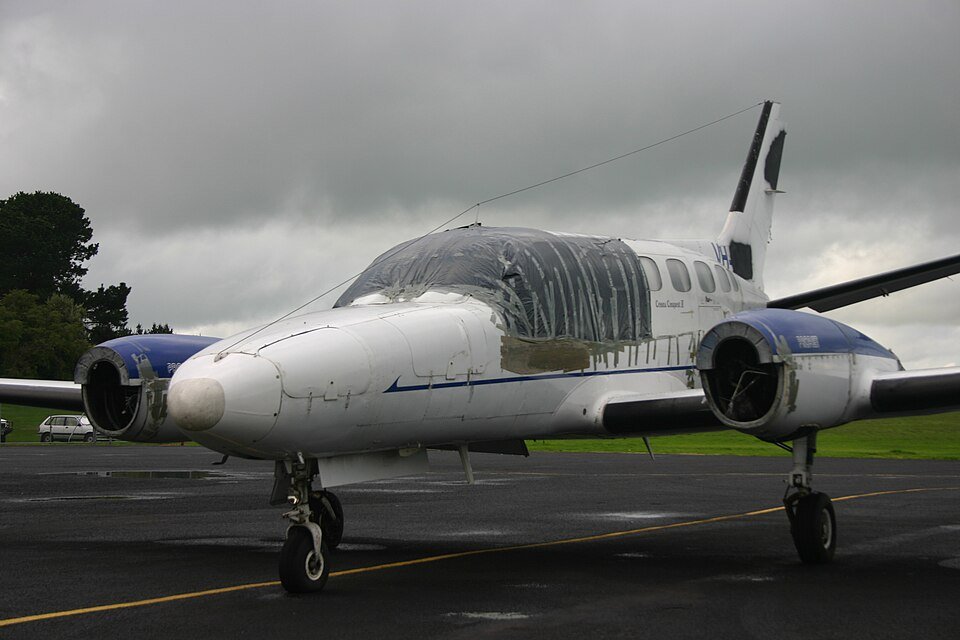
Image: paullymac (Flickr) (Representational)

Alaska, United States: A twin-engine Cessna 441 charter aircraft operated by Security Aviation crashed near the remote Cape Newenham Long Range Radar Site in western Alaska on Thursday, August 20, killing all eight people aboard, the US military said. The aircraft had departed Ted Stevens Anchorage International Airport and was approaching Cape Newenham when it went down.

The deaths were confirmed by the US military. The aircraft was carrying two pilots and six passengers, according to Clint Johnson, chief of the National Transportation Safety Board’s Alaska region. The aircraft crashed near Cape Newenham Long Range Radar Site Airport, about 450 miles (725 kilometres) west of Anchorage.

The Federal Aviation Administration said the aircraft crashed west of Cape Newenham LRRS Airport at about 12:15 p.m. local time. It had departed Anchorage and was travelling toward Cape Newenham. The aircraft was believed to have crashed during its approach to the remote radar site.

The crash initially prompted a search-and-rescue response. The Alaska Rescue Coordination Center said it launched a mission after receiving a report of an “aircraft incident” near the Cape Newenham Long Range Radar Site. 

The deaths were later confirmed by the US military. US Air Force Lt Gen Robert Davis, commander of Alaskan Command, the Alaskan North American Aerospace Defense Command Region and Eleventh Air Force, described the incident as a devastating loss. “This is a devastating loss for our military family and the communities we serve,” Davis said.

The aircraft was operated by Security Aviation, an Anchorage-based charter company. The Cessna 441 Conquest II is a twin-engine turboprop designed for utility and passenger operations and is used in Alaska’s demanding operating environment.

The circumstances that led to the crash remain unclear. Authorities have not announced whether the crew reported an emergency, whether the aircraft experienced a mechanical problem or whether weather played a role. No cause has been identified.

The NTSB is leading the investigation, with the FAA assisting. Investigators are expected to examine the wreckage, establish the aircraft’s flight path and determine what happened during the approach to Cape Newenham. No official cause of the crash has been announced.
Leave a Comment

Subscribe to our Newsletter

Recent News

Aviation Today Perspectives