News
Civil Aviation
Pilot Training
Flight School Analysis
Aviation Jobs
Training
Services
About Us
Contact Us

Airbus Completes Longest-Ever A350-1000 ULR Development Flight Ahead Of Project Sunrise

Picture of Aviation Today News Desk

Aviation Today News Desk

Airbus Completes Longest-Ever A350-1000 ULR Development Flight Ahead Of Project Sunrise SEO DES: Airbus' A350-1000 ULR test aircraft completed a record 24-hour, 24-minute nonstop development flight covering 12,460 nautical miles from Melbourne to Toulouse SOCIAL: Airbus’ A350-1000 ULR test aircraft MSN707 completed a record 24-hour-24-minute nonstop development flight from Melbourne, Australia, to Toulouse, France, covering 12,460 nautical miles. The flight was part of Airbus’ two-part development programme supporting Qantas’ Project Sunrise ultra-long-haul operations. The test evaluated the aircraft’s fuel-management systems, rear centre tank, cabin comfort, air-conditioning and new twin Flight Crew Rest Compartment. Pilots also followed specialised fatigue-management procedures, while Qantas pilots gained experience flying the A350-1000 ULR variant. The flight involved Airbus and Qantas pilots and flight-test engineers, with the aircraft following a route across the Pacific, North America and the Atlantic. The mission is expected to help validate the A350-1000 ULR for future nonstop commercial services connecting Australia with Europe and North America. Toulouse, France: Airbus has completed the longest flight ever flown by its A350-1000 ULR flight-test aircraft MSN707, with the specially instrumented MSN707 flying nonstop from Melbourne, Australia, to Toulouse, France, for 24 hours and 24 minutes. The aircraft covered 12,460 nautical miles (23,075 km or 14,338 miles) before landing in Toulouse on the morning of July 28, 2026. The flight was part of a two-part development flight-test programme. On July 23, MSN707 departed Toulouse on its longest point-to-point flight to Melbourne. A few days later, the aircraft began its return journey to Toulouse, carrying two Qantas guest pilots alongside the Airbus test crew. Airbus said the return flight was technically classified as a development test rather than a certification flight. The programme is designed to demonstrate the A350-1000ULR's ability to complete a 23-hour block-time mission. Block time runs from the release of the parking brake at departure until the aircraft reaches its arrival stand and is intended to provide sufficient operational margin around the planned 21-hour-40-minute flight time for Qantas' forthcoming Project Sunrise routes, including time for holding, diversion and taxiing. The aircraft is powered by two Rolls-Royce Trent XWB-97 engines and features an additional rear centre tank (RCT) with a 20,900-litre fuel capacity. The tank is designed to support ultra-long-range operations covering almost 10,000 nautical miles. During the flight, Airbus used the fully fueled RCT to validate remaining test points and assess fuel-management systems, while also evaluating cabin comfort and air-conditioning performance. Airbus Test Pilot Xavier Pepin, who served as captain on the record-setting return leg, said the first, approximately 20-hour leg was used to stabilise various cabin air-temperature settings for accurate measurements. The return flight then allowed the team to address backup test points that could not be completed during the first leg. The flight also evaluated the A350-1000ULR's new twin Flight Crew Rest Compartment. The specially designed facility has two separate sections with individual entrances, allowing pilots to access their respective rest areas without disturbing one another during airline operations. However, because the compartments were occupied by ventilation-measurement equipment during the test, the crew instead used the aircraft's eight-berth rear cabin-crew rest compartment for sleeping. The return flight from Melbourne followed a route across the Pacific toward Los Angeles, over the United States and Canada, and across the Atlantic south of Greenland before passing over the UK and continuing to southern France. Airbus selected a more northerly Atlantic routing to avoid potential air-traffic-control issues that could arise if published airline tracks were not updated before departure, potentially resulting in mismatched flight plans. Fatigue management was another key element of the ultra-long-range test. Airbus said pilots worked four-hour shifts but rotated every two hours, creating a two-hour overlap between the incoming and outgoing pilots. The arrangement was intended to support detailed handovers and maintain situational awareness throughout the 20- to 23-hour missions. On the return flight, at least one Airbus test pilot remained in a pilot seat whenever a Qantas pilot occupied the other seat, as Airbus retained operational responsibility for the mission. The schedule also allowed the Qantas pilots to take the controls at designated times. Both were already qualified on the A350 but were experiencing the A350-1000 ULR variant for the first time. The return flight was commanded by Airbus Test Pilot Xavier Pepin. Two Qantas pilots, Captain Andrew Coull and Captain David Summergreene, joined the mission, while one Airbus pilot from the outbound crew disembarked. Five pilots were therefore aboard for the return leg: three Airbus pilots and the two Qantas pilots. The two Test-Flight Engineers, Laurent Rossignol and Nicolas Granier, and three Flight-Test Engineers, Tuan Do, Alexia Plummet and Jaime Angoloti, remained on board for the return flight. The outbound leg had been led by Airbus Test Pilot Vincent Sibelle, who served as captain and was responsible for the overall mission organisation. The other Airbus pilots were Xavier Pepin, Josef Bayoud and Chetan Takalkar. The two Test-Flight Engineers monitored aircraft systems from the cockpit, while the three Flight-Test Engineers worked from stations in the main cabin, coordinating tests including cabin-comfort and fuel monitoring. The MSN707 test aircraft first flew on June 2, 2026, and is equipped with specialised instrumentation for the development programme. The latest flight is intended to help validate the aircraft's capabilities and systems ahead of its planned use for Qantas' Project Sunrise ultra-long-haul operations. The flight also attracted significant public attention. Reuters reported that more than 3.6 million people tracked the aircraft online, making it the second-most-followed flight ever on Flightradar24. The test demonstrated the potential of the A350-1000 ULR to support nonstop commercial services linking Australia's east coast with destinations in Europe and North America. The Melbourne-Toulouse development flight marks a major milestone in the testing of an aircraft designed to make some of the world's longest commercial passenger flights possible. Airbus' latest test programme is focused not only on endurance and fuel management but also on cabin conditions, crew-rest arrangements and operational procedures required for missions lasting more than 20 hours.
Image: Airbus

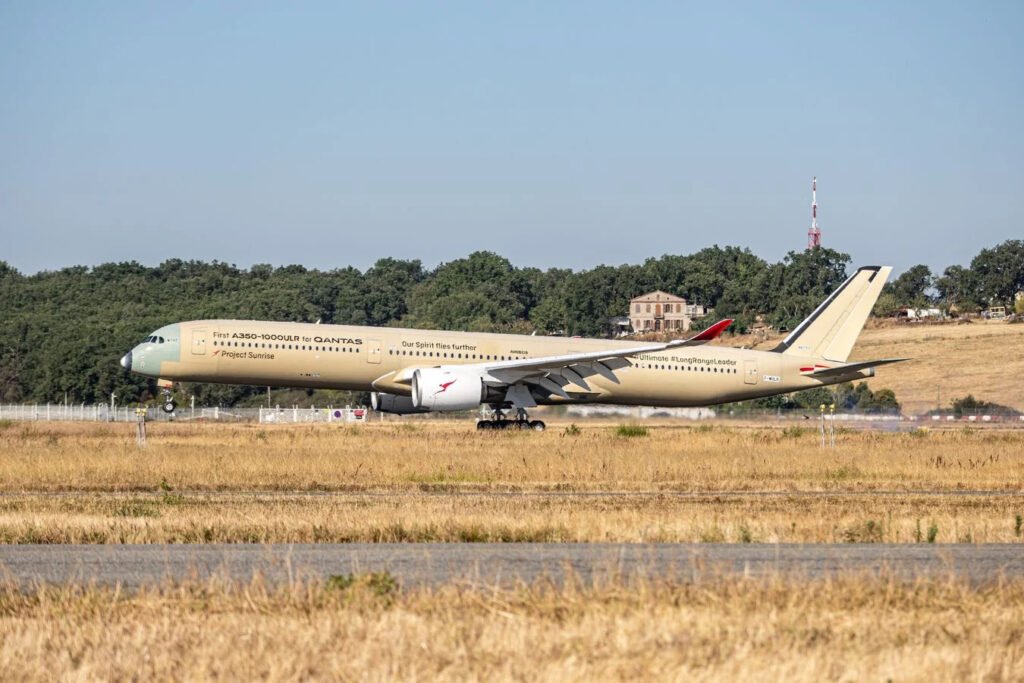
Toulouse, France: Airbus has completed the longest flight to date by its A350-1000 ULR flight-test aircraft, with the specially instrumented MSN707 flying nonstop from Melbourne, Australia, to Toulouse, France, for 24 hours and 24 minutes. The aircraft covered 12,460 nautical miles (23,075 km or 14,338 miles) before landing in Toulouse on the morning of July 28, 2026.

The flight was part of a two-part development flight-test programme. On July 23, MSN707 departed Toulouse on its longest point-to-point flight to Melbourne. A few days later, the aircraft began its return journey to Toulouse, carrying two Qantas guest pilots alongside the Airbus test crew. Airbus said the return flight was technically classified as a development test rather than a certification flight.
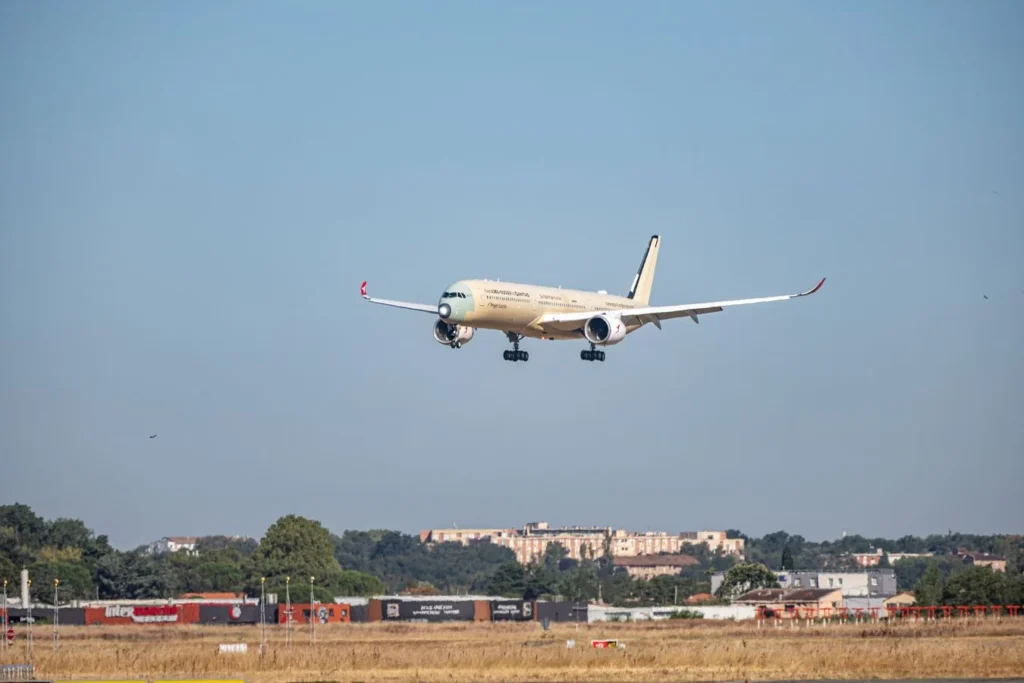
Image: Airbus

The programme is designed to demonstrate the A350-1000ULR’s ability to complete a 23-hour block-time mission. Block time runs from the release of the parking brake at departure until the aircraft reaches its arrival stand and is intended to provide sufficient operational margin around the planned 21-hour-40-minute flight time for Qantas’ forthcoming Project Sunrise routes, including time for holding, diversion and taxiing.

The aircraft is powered by two Rolls-Royce Trent XWB-97 engines and features an additional rear centre tank (RCT) with a 20,900-litre fuel capacity. The tank is designed to support ultra-long-range operations covering almost 10,000 nautical miles. During the flight, Airbus used the fully fueled RCT to validate remaining test points and assess fuel-management systems, while also evaluating cabin comfort and air-conditioning performance.
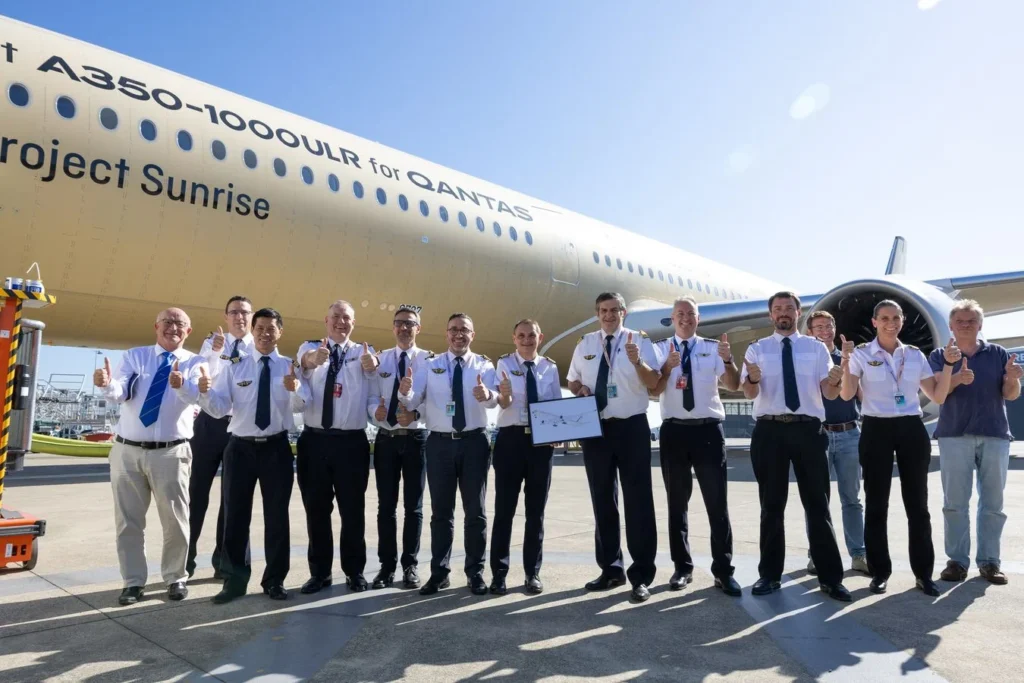
Image: Airbus

Airbus Test Pilot Xavier Pepin, who served as captain on the record-setting return leg, said the first, approximately 20-hour leg was used to stabilise various cabin air-temperature settings for accurate measurements. The return flight then allowed the team to address backup test points that could not be completed during the first leg.

The flight also evaluated the A350-1000ULR’s new twin Flight Crew Rest Compartment. The specially designed facility has two separate sections with individual entrances, allowing pilots to access their respective rest areas without disturbing one another during airline operations. However, because the compartments were occupied by ventilation-measurement equipment during the test, the crew instead used the aircraft’s eight-berth rear cabin-crew rest compartment for sleeping.

The return flight from Melbourne followed a route across the Pacific toward Los Angeles, over the United States and Canada, and across the Atlantic south of Greenland before passing over the UK and continuing to southern France. Airbus selected a more northerly Atlantic routing to avoid potential air-traffic-control issues that could arise if published airline tracks were not updated before departure, potentially resulting in mismatched flight plans.

Fatigue management was another key element of the ultra-long-range test. Airbus said pilots worked four-hour shifts but rotated every two hours, creating a two-hour overlap between the incoming and outgoing pilots. The arrangement was intended to support detailed handovers and maintain situational awareness throughout the 20- to 23-hour missions.
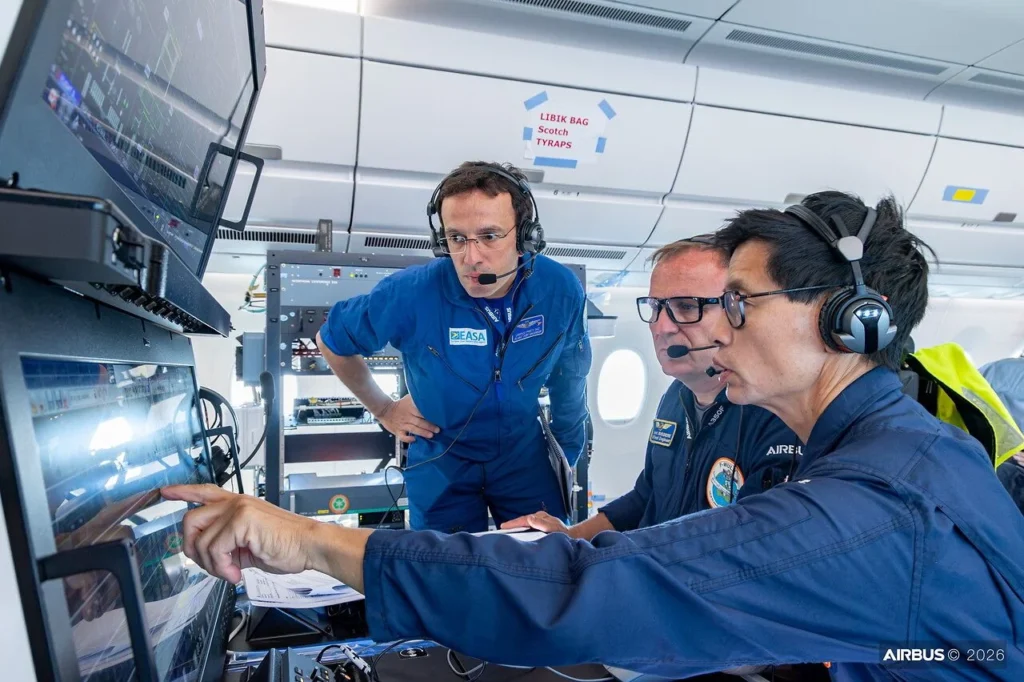
Image: Airbus

On the return flight, at least one Airbus test pilot remained in a pilot seat whenever a Qantas pilot occupied the other seat, as Airbus retained operational responsibility for the mission. The schedule also allowed the Qantas pilots to take the controls at designated times. Both were already qualified on the A350 but were experiencing the A350-1000 ULR variant for the first time.

The return flight was commanded by Airbus Test Pilot Xavier Pepin. Two Qantas pilots, Captain Andrew Coull and Captain David Summergreene, joined the mission, while one Airbus pilot from the outbound crew disembarked. Five pilots were therefore aboard for the return leg: three Airbus pilots and the two Qantas pilots. The two Test-Flight Engineers, Laurent Rossignol and Nicolas Granier, and three Flight-Test Engineers, Tuan Do, Alexia Plummet and Jaime Angoloti, remained on board for the return flight.

The outbound leg had been led by Airbus Test Pilot Vincent Sibelle, who served as captain and was responsible for the overall mission organisation. The other Airbus pilots were Xavier Pepin, Josef Bayoud and Chetan Takalkar. The two Test-Flight Engineers monitored aircraft systems from the cockpit, while the three Flight-Test Engineers worked from stations in the main cabin, coordinating tests including cabin-comfort and fuel monitoring.
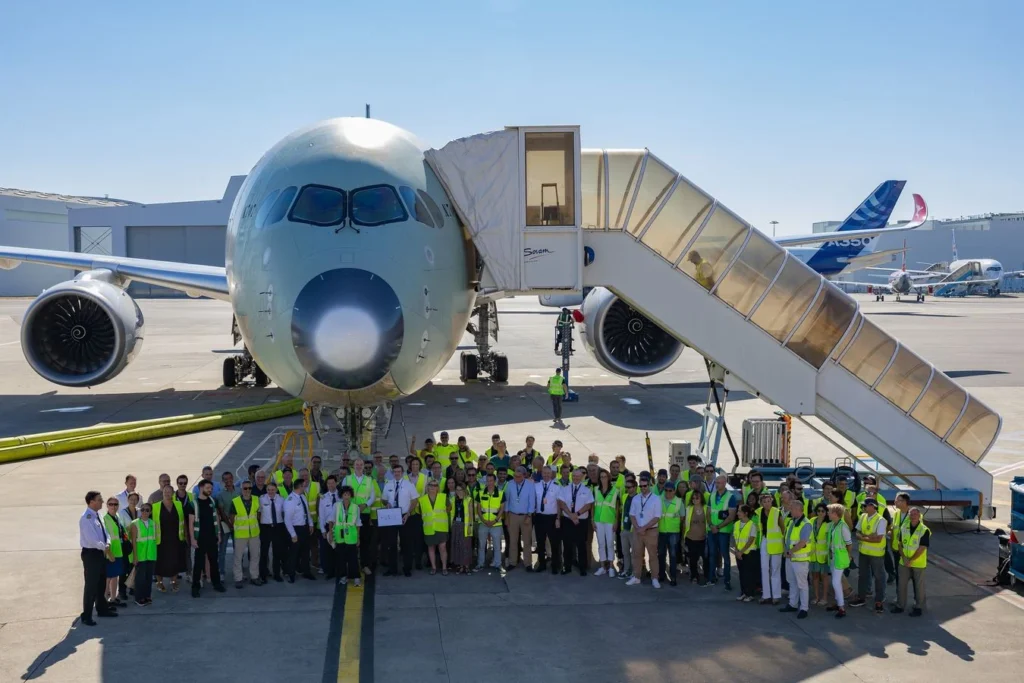
Image: Airbus

The MSN707 test aircraft first flew on June 2, 2026, and is equipped with specialised instrumentation for the development programme. The latest flight is intended to help validate the aircraft’s capabilities and systems ahead of its planned use for Qantas’ Project Sunrise ultra-long-haul operations.

The flight also attracted significant public attention. Reuters reported that more than 3.6 million people tracked the aircraft online, making it the second-most-followed flight ever on Flightradar24. The test demonstrated the potential of the A350-1000 ULR to support nonstop commercial services linking Australia’s east coast with destinations in Europe and North America.

The Melbourne-Toulouse development flight marks a major milestone in the testing of an aircraft designed to make some of the world’s longest commercial passenger flights possible. Airbus’ latest test programme is focused not only on endurance and fuel management but also on cabin conditions, crew-rest arrangements and operational procedures required for missions lasting more than 20 hours.
Leave a Comment

Subscribe to our Newsletter

Recent News

Aviation Today Perspectives