Geneva, Switzerland: The International Air Transport Association (IATA) has called on governments to strengthen the Carbon Offsetting and Reduction Scheme for International Aviation (CORSIA), warning that consistent implementation and continued international cooperation will be critical as the global aviation carbon framework moves toward wider coverage from 2027.
IATA issued the call on 6 October 2026 to mark 10 years since the International Civil Aviation Organization (ICAO) Assembly adopted CORSIA in 2016. The scheme was established as the first global market-based measure for an entire industrial sector and was developed as an international response to aviation’s carbon emissions following the 2015 Paris Agreement.
More than 130 countries currently participate in CORSIA. IATA estimates that the scheme will have mitigated about 200 million tonnes of CO2 by the end of 2026 and could cover approximately 85% of international aviation emissions from 2027. It also estimates that CORSIA could mobilise up to $120 billion in climate finance through the end of the scheme for emissions-reduction and carbon-removal projects worldwide.
IATA Senior Vice President Sustainability and Chief Economist Marie Owens Thomsen said CORSIA demonstrates the value of a single international framework for aviation emissions.
“As the first global, sector-wide climate agreement for aviation, CORSIA showcases the best of international collaboration: a global solution to a global challenge,” Thomsen said.
She said the framework helps maintain a level playing field for airlines while directing climate finance toward emissions-reduction efforts worldwide.
“CORSIA is already a landmark achievement,” Thomsen said, adding that with broad participation, consistent implementation and continued government support, it could become a major example of international climate action and climate finance.
CORSIA was designed specifically to avoid a fragmented collection of national and regional market-based measures for international aviation. ICAO describes it as the single global market-based measure addressing international aviation emissions.
The CORSIA anniversary comes as the European Union reviews its Emissions Trading System (EU ETS), including proposals that could extend the system to destinations within 5,000 km of the EU, calculated using Frankfurt as the geographic centre.
IATA has argued that such an expansion should not undermine CORSIA by creating overlapping regional or bilateral carbon-pricing arrangements.
“The EU ETS review should reinforce CORSIA as the global framework for international aviation, not encourage overlapping regional or bilateral systems,” said Thomas Reynaert, IATA’s Senior Vice President External Affairs.
Reynaert said Europe could achieve greater climate and competitiveness benefits by directing aviation-related revenues toward Sustainable Aviation Fuels (SAF), infrastructure and emerging aviation technologies, rather than increasing carbon costs without addressing the sector’s underlying energy constraints.
IATA also criticised the absence of an impact assessment examining the possible consequences of expanding the EU ETS for third countries, international connectivity, airline competitiveness and the operation of CORSIA.
According to IATA’s revised analysis, the proposed expansion could increase EU ETS compliance costs by 40% to EUR 280 billion between 2027 and 2040.
IATA has called for the EU ETS review to reinforce CORSIA by ensuring its full and unified implementation for international aviation without extending the EU system extraterritorially.
It also wants the proposed “EU ETS as a Service” mechanism removed, arguing that it could encourage additional regional or bilateral carbon-pricing systems alongside CORSIA.
On SAF, IATA wants stronger support through the EU’s SAF allowances mechanism to become available immediately rather than being concentrated from 2029. It is also seeking the removal of geographic production restrictions and other conditions that could limit support for sustainability-compliant SAF pathways.
For European competitiveness, IATA wants revenues generated from aviation-related ETS measures to be ring fenced for SAF production, aviation infrastructure and emerging technologies. The association said its revised recommendations have been submitted to European policymakers as part of the ongoing legislative process.
CORSIA currently operates through a phased structure. Its pilot phase ran from 2021 to 2023, followed by the first phase covering 2024-2026. From 2027, participation is determined according to ICAO’s criteria based on international revenue tonne-kilometre data, although certain developing countries remain exempt unless they voluntarily participate. ICAO’s current list shows 134 States participating from 1 January 2027.
The next phase will therefore significantly broaden the scheme’s coverage, increasing the importance of having enough eligible carbon credits available for airlines to meet their obligations.
IATA has separately warned that the supply of CORSIA Eligible Emissions Units (EEUs) is currently insufficient. Its September 2026 assessment estimated that airlines could need more than 200 million EEUs by January 2028, while only about 72 million units were covered by CORSIA-compatible Letters of Authorization issued by host countries as of August 2026. That left a gap of roughly 150 million units to be addressed over the following 15 months.
To address the supply problem, IATA launched a Supporting Alliance for CORSIA EEU Supply in June 2026. The alliance is working toward making 225-250 million CORSIA EEUs available by spring 2027 and includes governments, airlines, carbon-market organisations and other aviation stakeholders.
ICAO has also expanded the pool of emissions-unit programmes approved to supply eligible credits under CORSIA. For the first phase, eight programmes have been approved, while four have been approved for the second phase covering 2027-2029. ICAO has encouraged governments to issue Letters of Authorization confirming that credits used under CORSIA will not also be counted toward national climate commitments under the Paris Agreement.
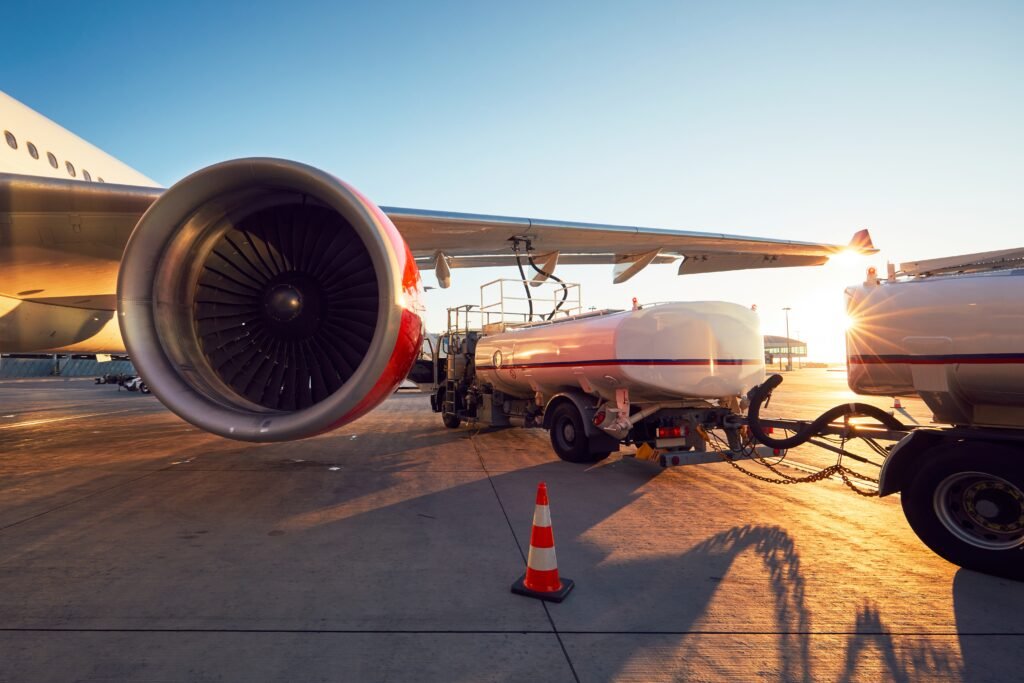
The carbon-credit mechanism is only one part of aviation’s wider decarbonisation strategy. CORSIA operates alongside efforts to improve aircraft technology and operational efficiency and increase the production and use of lower-carbon fuels, particularly SAF.
IATA’s position is that a globally harmonised CORSIA system should remain the central mechanism for addressing international aviation emissions, while revenues and policy support should be directed toward technologies and fuels capable of reducing aviation’s underlying emissions.
The association’s latest call therefore comes at a significant point for CORSIA: the scheme is approaching the end of its first phase, its coverage is set to expand from 2027, and the industry faces a substantial shortfall in eligible carbon units. IATA is urging governments to close those implementation gaps while avoiding overlapping carbon regimes that could increase costs and fragment the international aviation market.