News
Civil Aviation
Pilot Training
Flight School Analysis
Aviation Jobs
Training
Services
About Us
Contact Us

China’s Homegrown C919 Makes International Debut With Air China Flight To Mongolia

Picture of Aviation Today News Desk

Aviation Today News Desk

international operations. Beijing, China: Air China’s COMAC C919 completed its first scheduled international passenger service on August 12, 2026, when flight CA723 departed Beijing Capital International Airport at about 3 p.m. for Ulaanbaatar, Mongolia, marking the first time the Chinese-developed narrowbody aircraft carried passengers on a regular route between China and another country. The aircraft arrived at Chinggis Khaan International Airport at about 4:58 p.m. with 121 passengers onboard. China operates the route daily, with CA723 scheduled to depart Beijing at 3 p.m. and arrive in Ulaanbaatar at 5:15 p.m., while return flight CA724 departs Ulaanbaatar at 6:30 p.m. and reaches Beijing at 8:35 p.m., with all times local. The Beijing-Ulaanbaatar operation marks the latest stage in the C919’s commercial development since the aircraft entered airline service in 2023. The C919 was developed by Commercial Aircraft Corporation of China (COMAC), the country’s state-owned commercial aircraft manufacturer, as China’s first domestically developed narrowbody mainline jet built to international airworthiness standards. COMAC lists the aircraft’s basic configuration at 158 to 192 seats, with a range of 4,075 to 5,555 kilometers. The programme reached a major milestone on November 2, 2015, when the first C919 completed final assembly and rolled out, followed by its maiden flight on May 5, 2017. The aircraft received its type certificate from the Civil Aviation Administration of China (CAAC) on September 29, 2022, and the first C919 was delivered to launch customer China Eastern Airlines on December 9, 2022. China Eastern subsequently operated the aircraft’s first commercial passenger flight on May 28, 2023, completing the development, manufacturing, certification and commercial-entry stages of the programme. The C919’s international exposure began before Wednesday’s scheduled service. In February 2024, a China Eastern C919 flew to Singapore for the Singapore Airshow, marking the aircraft’s first appearance at the event. COMAC then conducted a series of demonstration flights in Southeast Asia in 2024, including visits to Vietnam, Laos, Cambodia, Malaysia and Indonesia, to assess the aircraft’s compatibility with local airports, ground-support equipment and operating procedures. The C919 programme has also expanded beyond the original aircraft configuration. On July 29, 2026, COMAC conducted the first flight of the C919 high-altitude variant at Shanghai Pudong International Airport. The aircraft flew for 1 hour and 59 minutes and completed all planned test items. COMAC said the variant incorporates a shortened fuselage and system modifications designed for high-altitude operations. The aircraft remains heavily dependent on an international supply chain. Its LEAP-1C engines are supplied by CFM International, the GE Aerospace-Safran joint venture, while Honeywell, Collins Aerospace, Parker Hannifin, Moog and other Western companies supply systems and equipment. Air Data News reported that this dependence became particularly visible during the 2025 US-China trade dispute, when Washington temporarily suspended export licenses involving technology and engines destined for COMAC before the restrictions were later lifted. The C919’s dependence on foreign technology has also been a factor in China’s efforts to develop domestic alternatives. Replacing established Western systems requires more than manufacturing substitute components, because replacement systems must meet requirements for reliability, weight, fuel efficiency, durability and certification. Production has been another major part of the programme’s development. COMAC delivered 15 C919 aircraft to customers in 2025, well below an earlier target of 75 aircraft. South China Morning Post reported in January 2026 that COMAC was targeting at least 28 deliveries during 2026 and that, if production reached the expected pace, the manufacturer could produce one C919 every 10 to 15 days. The report said two aircraft had already taken shape during the first three weeks of 2026 and were undergoing delivery procedures. COMAC has also been expanding its production infrastructure. ChinaTravelNews reported in July 2026 that deliveries were expected to reach at least 28 C919 aircraft in 2026, with production potentially increasing to one aircraft every 10 to 15 days. The second phase of the C919 final-assembly-line expansion in Shanghai Pudong is expected to take annual production capacity above 100 aircraft, while COMAC has set a longer-term target of 200 aircraft a year by 2029. Earlier production plans were even more ambitious. In March 2025, COMAC raised its planned C919 production capacity for that year to 75 aircraft from an earlier target of 50, while setting a 200-aircraft annual production objective for 2029. The actual 2025 delivery figure subsequently came in at 15 aircraft. The C919’s order book has been concentrated largely among Chinese airlines. By December 2024, Air Data News reported that Air China, China Southern and China Eastern together had ordered 306 C919 aircraft, although only 14 had been delivered to the three carriers at that point. COMAC was simultaneously exploring potential overseas customers in Indonesia, Cambodia and Kazakhstan, while Vietnam Airlines, AirAsia and Brazil’s Total Linhas A
Image: Xinhua News

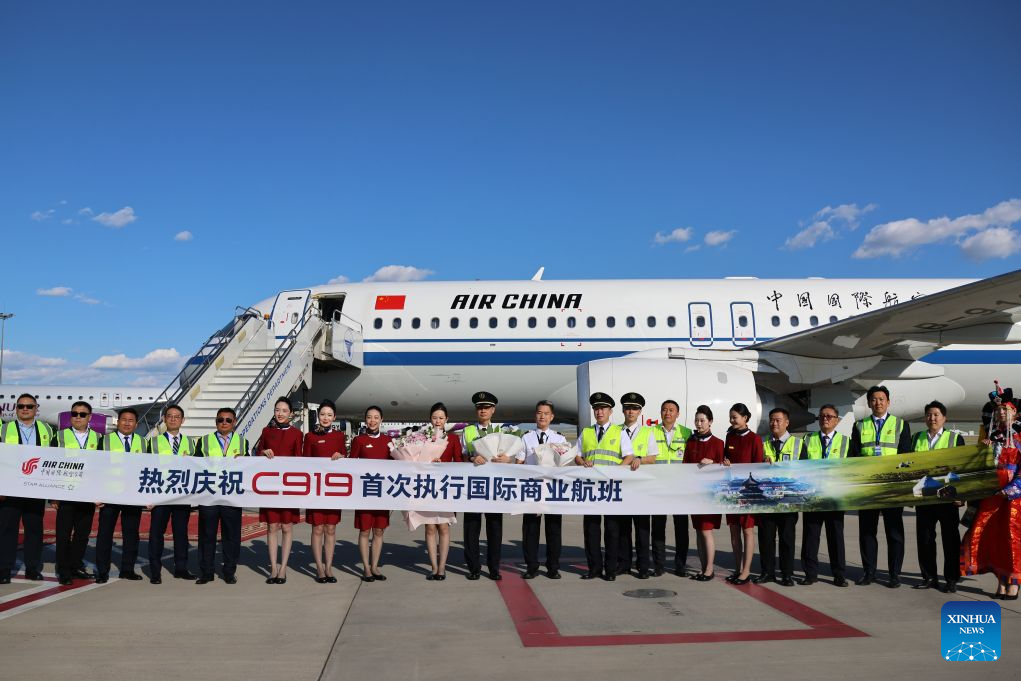
Beijing, China: Air China’s COMAC C919 completed its first scheduled international passenger service on August 12, 2026, when flight CA723 departed Beijing Capital International Airport at about 3 p.m. for Ulaanbaatar, Mongolia, marking the first time the Chinese-developed narrowbody aircraft carried passengers on a regular route between China and another country. The aircraft arrived at Chinggis Khaan International Airport at about 4:58 p.m. with 121 passengers onboard. 

China operates the route daily, with CA723 scheduled to depart Beijing at 3 p.m. and arrive in Ulaanbaatar at 5:15 p.m., while return flight CA724 departs Ulaanbaatar at 6:30 p.m. and reaches Beijing at 8:35 p.m., with all times local.

The Beijing-Ulaanbaatar operation marks the latest stage in the C919’s commercial development since the aircraft entered airline service in 2023. The C919 was developed by Commercial Aircraft Corporation of China (COMAC), the country’s state-owned commercial aircraft manufacturer, as China’s first domestically developed narrowbody mainline jet built to international airworthiness standards. COMAC lists the aircraft’s basic configuration at 158 to 192 seats, with a range of 4,075 to 5,555 kilometers. The programme reached a major milestone on November 2, 2015, when the first C919 completed final assembly and rolled out, followed by its maiden flight on May 5, 2017.
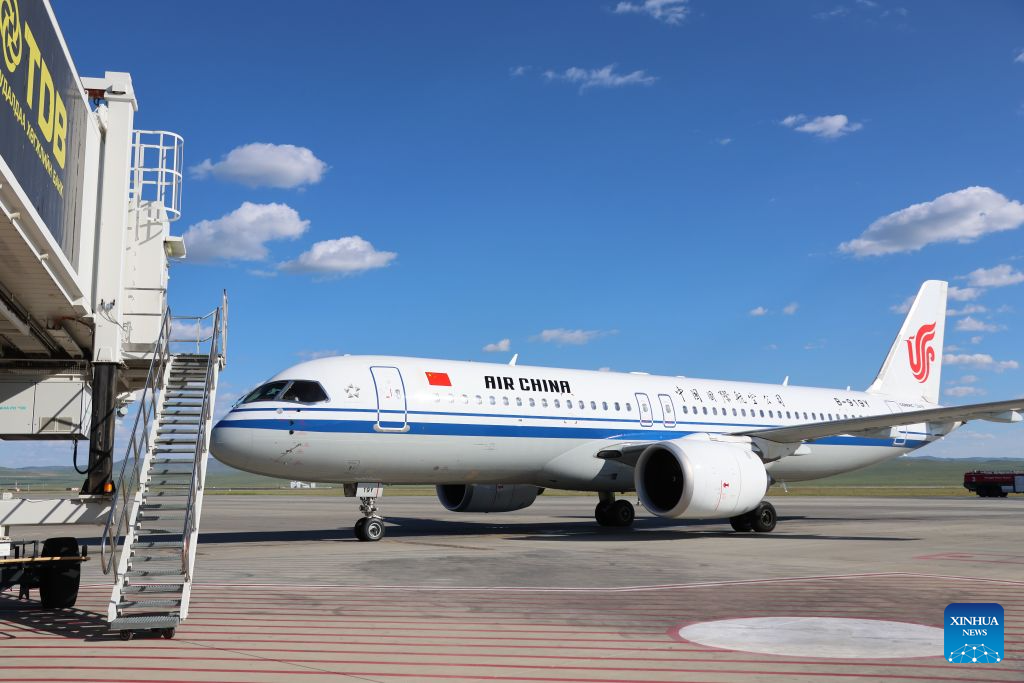
Image: Xinhua News

The aircraft received its type certificate from the Civil Aviation Administration of China (CAAC) on September 29, 2022, and the first C919 was delivered to launch customer China Eastern Airlines on December 9, 2022. China Eastern subsequently operated the aircraft’s first commercial passenger flight on May 28, 2023, completing the development, manufacturing, certification and commercial-entry stages of the programme.

The C919’s international exposure began before Wednesday’s scheduled service. In February 2024, a China Eastern C919 flew to Singapore for the Singapore Airshow, marking the aircraft’s first appearance at the event. COMAC then conducted a series of demonstration flights in Southeast Asia in 2024, including visits to Vietnam, Laos, Cambodia, Malaysia and Indonesia, to assess the aircraft’s compatibility with local airports, ground-support equipment and operating procedures.

The C919 programme has also expanded beyond the original aircraft configuration. On July 29, 2026, COMAC conducted the first flight of the C919 high-altitude variant at Shanghai Pudong International Airport. The aircraft flew for 1 hour and 59 minutes and completed all planned test items. COMAC said the variant incorporates a shortened fuselage and system modifications designed for high-altitude operations.
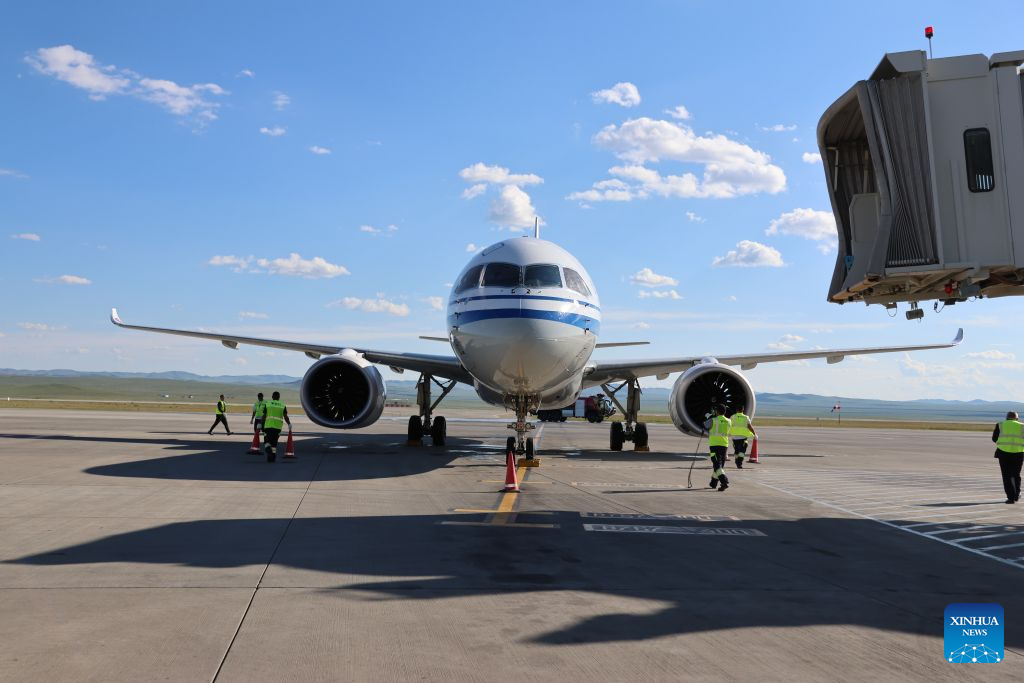
Image: Xinhua News

The aircraft remains heavily dependent on an international supply chain. Its LEAP-1C engines are supplied by CFM International, the GE Aerospace-Safran joint venture, while Honeywell, Collins Aerospace, Parker Hannifin, Moog and other Western companies supply systems and equipment. Air Data News reported that this dependence became particularly visible during the 2025 US-China trade dispute, when Washington temporarily suspended export licenses involving technology and engines destined for COMAC before the restrictions were later lifted.

The C919’s dependence on foreign technology has also been a factor in China’s efforts to develop domestic alternatives. Replacing established Western systems requires more than manufacturing substitute components, because replacement systems must meet requirements for reliability, weight, fuel efficiency, durability and certification.

Production has been another major part of the programme’s development. COMAC delivered 15 C919 aircraft to customers in 2025, well below an earlier target of 75 aircraft. South China Morning Post reported in January 2026 that COMAC was targeting at least 28 deliveries during 2026 and that, if production reached the expected pace, the manufacturer could produce one C919 every 10 to 15 days. The report said two aircraft had already taken shape during the first three weeks of 2026 and were undergoing delivery procedures.

COMAC has also been expanding its production infrastructure. ChinaTravelNews reported in July 2026 that deliveries were expected to reach at least 28 C919 aircraft in 2026, with production potentially increasing to one aircraft every 10 to 15 days. The second phase of the C919 final-assembly-line expansion in Shanghai Pudong is expected to take annual production capacity above 100 aircraft, while COMAC has set a longer-term target of 200 aircraft a year by 2029.
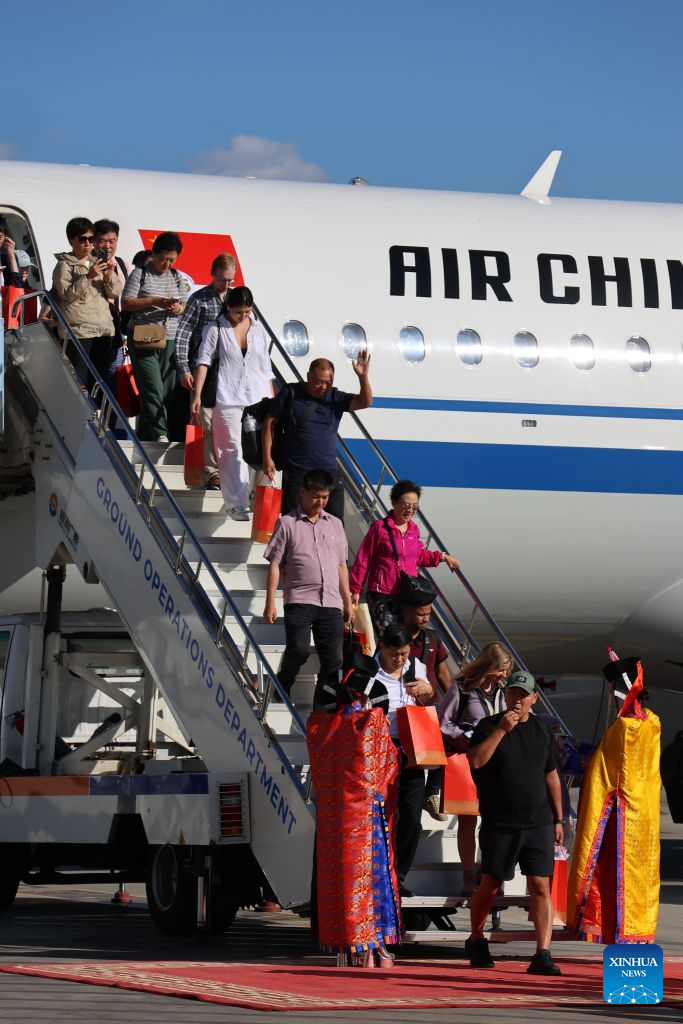
Image: Xinhua News

Earlier production plans were even more ambitious. In March 2025, COMAC raised its planned C919 production capacity for that year to 75 aircraft from an earlier target of 50, while setting a 200-aircraft annual production objective for 2029. The actual 2025 delivery figure subsequently came in at 15 aircraft.

The C919’s order book has been concentrated largely among Chinese airlines. By December 2024, Air Data News reported that Air China, China Southern and China Eastern together had ordered 306 C919 aircraft, although only 14 had been delivered to the three carriers at that point. COMAC was simultaneously exploring potential overseas customers in Indonesia, Cambodia and Kazakhstan, while Vietnam Airlines, AirAsia and Brazil’s Total Linhas Aereas had also been identified as possible customers or prospective operators.

The manufacturer’s efforts to expand beyond China have also included the smaller C909, formerly known as the ARJ21. C909 aircraft have entered service in several Southeast Asian markets, providing COMAC with some experience operating its aircraft outside China. ChinaTravelNews reported in July 2026 that C909 aircraft had served 25 overseas routes connecting 28 cities and carried more than 1 million passengers.

For the C919 itself, international certification remains an important step in its wider expansion. The aircraft has Chinese type certification but has not yet received type certification from either the European Union Aviation Safety Agency or the US Federal Aviation Administration. EASA’s chief executive, Florian Guillermet, said in April 2025 that the European certification process could take another three to six years, making 2028 the earliest scenario discussed at the time.

The aircraft also uses less composite material than the A320neo, which could contribute to a structural-weight disadvantage, although the overall efficiency of an aircraft depends on its wider design rather than on airframe materials alone. Detailed independent operating data will be required to establish how the C919 performs in everyday airline service compared with its established Western competitors.

The August 12 Beijing-Ulaanbaatar service therefore adds a new chapter to the C919’s development: the aircraft has moved from domestic commercial operations and overseas demonstrations to a scheduled international passenger route.


Leave a Comment

Subscribe to our Newsletter

Recent News

Aviation Today Perspectives