Muan, South Korea: South Korea’s investigation into the deadly Jeju Air Flight 2216 crash has entered a new phase after internal investigation records reportedly indicated that passenger seats on the Boeing 737-800 detached during the impact despite experiencing forces below the crashworthiness standard required under U.S. regulations. The reported findings first published by The Chosun Daily have raised fresh questions about the aircraft’s occupant protection system and could add another dimension to ongoing litigation against Boeing, although investigators have not yet issued a final accident report or determined the crash’s probable cause.
According to records from South Korea’s Aviation and Railway Accident Investigation Board (ARAIB), investigators measured a maximum impact of 14.9g inside the aircraft cabin when the jet struck a reinforced concrete embankment supporting the Instrument Landing System (ILS) localizer at Muan International Airport. The Chosun Daily newspaper reported that the forward cabin experienced approximately 14.9g, while the middle and rear sections recorded 13.6g and 14.0g, respectively.
The reported measurements have drawn attention because the US Federal Aviation Administration (FAA) requires passenger seats, attachment fittings and fastening systems to withstand 16g dynamic crash loads during certification testing. According to the report, investigators are examining whether seats detached from the aircraft structure despite impact forces remaining below the certified design threshold. It is also reported that investigators obtained video footage showing seats being torn from the cabin during the collision, with some reportedly thrown nearly 100 metres ahead of the wreckage. Internal meeting records reviewed by The Chosun Daily newspaper reportedly noted that the discrepancy between the measured impact loads and FAA certification requirements “could lead to Boeing’s responsibility,” prompting investigators to examine whether seat performance contributed to the severity of the accident.
However, these findings have not been published in an official preliminary investigation report. Instead, they originate from internal investigative documents and meeting records obtained by The Chosun Daily newspaper. ARAIB has not officially concluded that seat failures caused or contributed to the fatalities, and the overall investigation remains ongoing.
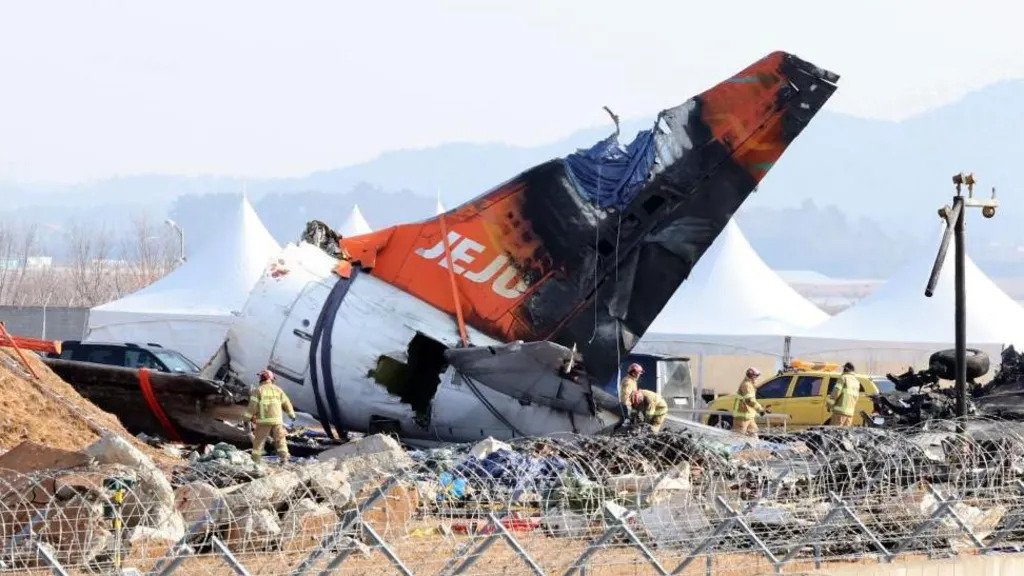
The latest development stems from the investigation into Jeju Air Flight 2216, which crashed on December 29, 2024, while operating a scheduled service from Bangkok’s Suvarnabhumi Airport to Muan International Airport in South Korea. The Boeing 737-800, registration HL8088, was carrying 181 people, 75 passengers and six crew members. The aircraft declared an emergency shortly before landing after a reported bird strike, with investigators later confirming evidence of bird remains in both engines, although the right engine appeared to sustain more significant damage.
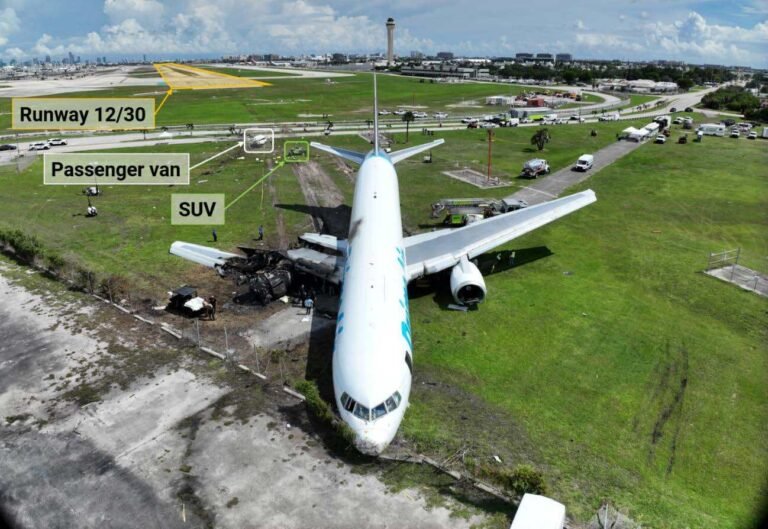
Following the emergency, the crew abandoned its initial landing attempt and returned to land in the opposite direction. The aircraft ultimately performed a gear-up belly landing, sliding along the runway without its landing gear deployed before overrunning the runway and colliding with a reinforced concrete embankment supporting the airport’s ILS localizer antenna. The high-speed impact destroyed much of the aircraft and triggered a post-crash fire. One hundred and seventy-nine people were killed, while two cabin crew members seated in the rear section survived, making it South Korea’s deadliest aviation disaster in decades.
The investigation is being led by ARAIB with participation from the U.S. National Transportation Safety Board (NTSB), the FAA, Boeing, and GE Aerospace, in accordance with international accident investigation procedures. Both the aircraft’s Cockpit Voice Recorder (CVR) and Flight Data Recorder (FDR) were recovered, although investigators later disclosed that both stopped recording approximately four minutes before the crash, complicating efforts to reconstruct the aircraft’s final moments. The damaged flight data recorder was subsequently sent to the United States for specialist analysis.
ARAIB released its preliminary investigation report on January 27, 2025, confirming evidence of bird strikes affecting both engines, the gear-up landing and the runway overrun, but did not identify a probable cause. As is standard practice, the preliminary report provided factual information gathered during the early stages of the investigation while technical examinations continued.
Since then, the investigation has expanded beyond the initial bird strike to examine multiple factors that may have influenced the accident and its outcome. One of the most controversial developments emerged in late 2025 when investigators reportedly briefed victims’ families on evidence suggesting the left engine, which appeared to have sustained less visible bird-strike damage than the right, may have been shut down during the emergency. The disclosure prompted criticism from families, who argued that pilot-related findings should not be highlighted before other technical issues including airport design, aircraft systems and structural performance had been fully investigated. Amid the controversy, investigators postponed the planned release of additional findings.
In February 2026, South Korea transferred ARAIB from the Ministry of Land, Infrastructure and Transport to the Prime Minister’s Office as part of efforts to strengthen the independence of aviation accident investigations. A new chairperson was subsequently appointed, and the investigation entered a renewed phase under the reorganized authority.
Investigators have also examined the role of airport infrastructure in the severity of the accident. In March 2026, South Korea’s Board of Audit and Inspection criticized aspects of the planning and approval process surrounding the concrete localizer embankment struck by the aircraft, stating that shortcomings in airport safety management warranted corrective action. Aviation safety specialists have long questioned the presence of a rigid concrete structure beyond the runway, arguing that such navigational equipment should be supported by frangible or energy-absorbing structures designed to minimize damage if struck by an aircraft.
The reported seat findings have emerged against the backdrop of broader scrutiny of Boeing aircraft seating systems. On July 27, 2026, the FAA issued an Airworthiness Directive concerning improperly installed passenger seats on certain Boeing 737 MAX aircraft, warning that incorrectly installed seats could increase the risk of injuries during turbulence or emergency landings. Although the directive applies to the newer 737 MAX family rather than the 737-800 involved in the Jeju Air accident, aviation experts have noted that it has renewed attention on seat installation and crashworthiness. Investigators, however, have not established any direct connection between the FAA directive and the accident aircraft.
The latest reported findings could also influence ongoing legal proceedings in the United States, where victims’ families have filed lawsuits against Boeing. The company has consistently maintained that the aircraft was not defective and has argued that the fatal outcome primarily resulted from the collision with the concrete embankment following the emergency landing attempt.
Despite the new revelations, investigators continue to emphasize that no final conclusions have been reached. The reported 14.9g seat measurements represent one aspect of a broader investigation examining the interaction of the bird strike, engine damage, aircraft systems, cockpit actions, the failure to deploy the landing gear, the runway overrun, airport infrastructure and crash survivability. ARAIB has not yet released a final accident report, and no official probable cause has been assigned.