New Delhi, India: As India prepares for the mandatory implementation of the International Civil Aviation Organization’s (ICAO) Carbon Offsetting and Reduction Scheme for International Aviation (CORSIA) from January 1, 2027, the Ministry of Civil Aviation (MoCA) has stepped up efforts to establish a robust Sustainable Aviation Fuel (SAF) ecosystem.
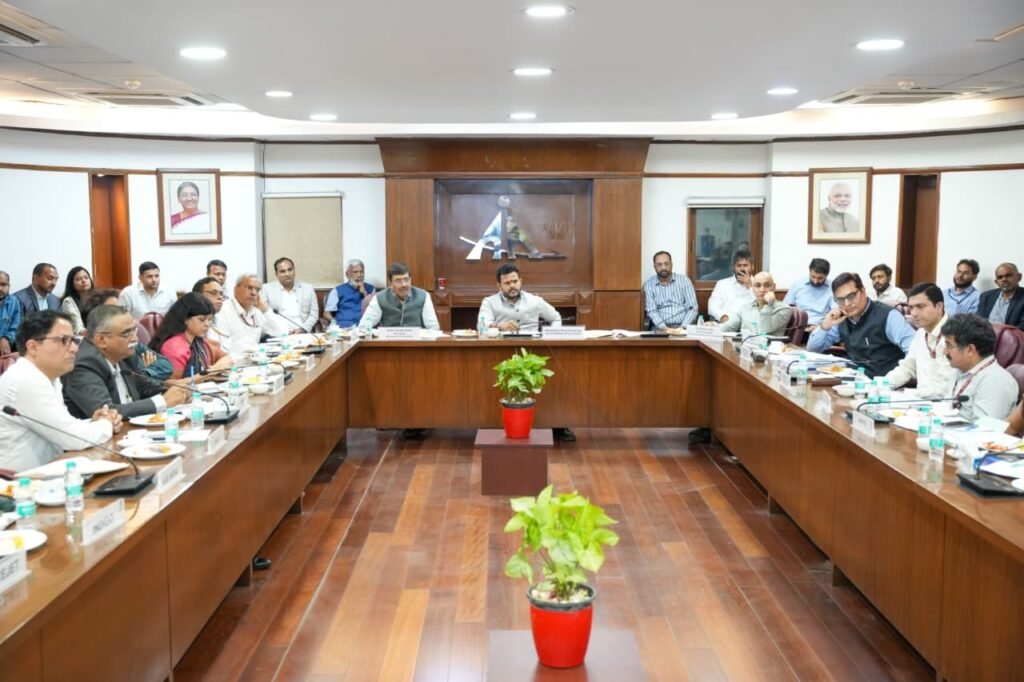
Civil Aviation Minister Ram Mohan Naidu recently chaired a high-level stakeholder meeting to review the country’s preparedness for SAF adoption, carbon accounting mechanisms and compliance with global aviation emissions standards. The review comes as the government moves closer to finalising India’s draft Sustainable Aviation Fuel Policy, which is currently undergoing inter-ministerial consultations.
The meeting brought together senior officials from the Ministry of Civil Aviation, Ministry of Petroleum and Natural Gas, Ministry of Environment, Forest and Climate Change, Directorate General of Civil Aviation (DGCA), Airports Authority of India (AAI), Bureau of Indian Standards (BIS), Bureau of Energy Efficiency (BEE), Oil Marketing Companies (OMCs), airlines, airport operators and other key industry stakeholders. Discussions focused on ensuring that India is operationally ready before the mandatory CORSIA phase begins in 2027.
A key focus of the meeting was the progress of domestic Sustainable Aviation Fuel production. Officials reviewed the status of SAF production facilities being developed by Oil Marketing Companies, their commissioning timelines, certification processes and measures required to ensure sufficient fuel availability for airlines from 2027 onwards. Stakeholders also assessed India’s preparedness to build a reliable domestic supply chain capable of supporting growing SAF demand while reducing dependence on imported sustainable fuels.
The government also reviewed the proposed national roadmap for SAF blending, outlining the responsibilities of fuel suppliers, airlines and airport operators in implementing the programme. Discussions covered fuel production, transportation, airport storage infrastructure and distribution systems required to integrate Sustainable Aviation Fuel into regular aviation operations across the country.
Another major area of discussion was the creation of a comprehensive accounting, monitoring and reporting framework aligned with ICAO’s CORSIA requirements. Officials examined plans to establish a national SAF Registry that would provide end-to-end traceability of Sustainable Aviation Fuel throughout its production, transportation and consumption cycle. The registry is expected to support accurate emissions accounting and improve transparency in SAF certification and usage.
The meeting further reviewed India’s preparedness for implementing CORSIA-related regulatory requirements, including the issuance of Letters of Authorisation and the development of a CORSIA-compliant domestic carbon market framework. These mechanisms are intended to ensure that Indian airlines can meet international emissions reporting and offsetting obligations while maintaining compliance with ICAO standards.
According to the Ministry of Civil Aviation, significant progress has already been made in developing India’s SAF supply chain and carbon accounting systems. However, Minister Ram Mohan Naidu directed all concerned ministries, regulators and industry stakeholders to accelerate implementation so that the country is fully prepared before CORSIA enters its mandatory phase in January 2027.
The Minister also informed stakeholders that the draft Sustainable Aviation Fuel Policy is in its final stages and is being refined through consultations with multiple ministries and industry participants. The policy is expected to provide a long-term framework for domestic SAF production, blending, certification and commercial deployment while supporting India’s aviation decarbonisation goals.
Emphasising affordability, Naidu stated that passenger interests would remain central to the policy framework. The government aims to minimise the financial impact of SAF adoption on airlines and travellers by identifying the most cost-effective methods for fuel production, transportation, distribution and airport supply.
India has already outlined a phased SAF blending roadmap under its broader decarbonisation strategy, targeting a 1% blend in 2027, increasing to 2% in 2028 and reaching 5% by 2030. These targets are intended to support compliance with international emissions reduction commitments while encouraging investment in domestic SAF production capacity and associated infrastructure.
CORSIA, developed by the International Civil Aviation Organization, is the first global market-based mechanism designed to stabilize carbon dioxide emissions from international aviation. From January 1, 2027, participation enters its mandatory phase for eligible states, requiring airlines to monitor, report and offset emissions above prescribed baseline levels through approved carbon reduction measures, including the use of Sustainable Aviation Fuel.
The government’s latest review reflects India’s broader strategy of strengthening domestic SAF production, establishing transparent carbon accounting systems and creating the regulatory framework needed for seamless compliance with international aviation environmental standards. With the draft SAF policy nearing completion, the coming months are expected to focus on finalising implementation mechanisms, expanding production capacity and ensuring that the aviation sector is ready ahead of the 2027 CORSIA deadline.