News
Civil Aviation
Pilot Training
Flight School Analysis
Aviation Jobs
Training
Services
About Us
Contact Us

Alaska Airlines Lands Safely In Kansas City After Reported Mid-Air Engine Fire Scare

Picture of Aviation Today News Desk

Aviation Today News Desk

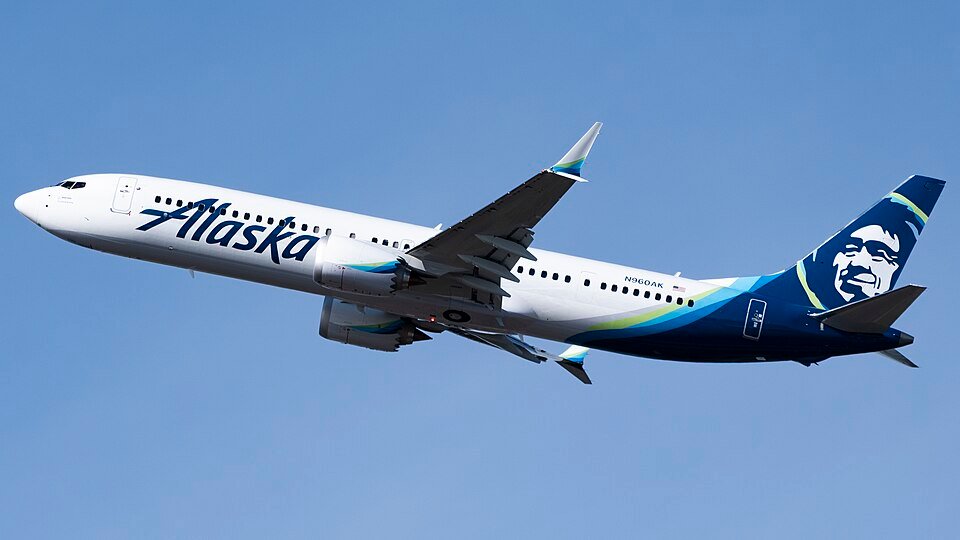
Kansas City, United States: An Alaska Airlines Boeing 737 MAX 9 operating a scheduled flight from Seattle to Kansas City landed safely at Kansas City International Airport (MCI) late on July 15 after the flight crew reported seeing flames from one of the aircraft's engines during the approach, prompting an Alert 3 emergency response from airport rescue and firefighting personnel. No injuries were immediately reported, and the situation was brought under control within minutes. According to FlightAware data, the aircraft departed Seattle-Tacoma International Airport at 8:31 p.m. CDT and arrived at Kansas City International Airport at 11:54 p.m., approximately five minutes ahead of schedule. The aircraft involved was a Boeing 737 MAX 9. Shortly before midnight, Kansas City Fire Department Airport Rescue and Fire Fighting (ARFF) units were dispatched after an Alert 3 was declared for the arriving Alaska Airlines flight. Emergency radio transmissions captured by Broadcastify indicated dispatchers instructed ARFF-1 and supporting units to respond immediately. Within two minutes of arriving at the gate, ARFF personnel reported that the aircraft was parked safely and that no visible fire or smoke was evident. Police officers were already at the scene as emergency crews began assessing the aircraft. A subsequent radio update on July 16 stated that the aircraft had experienced an engine fire involving the No. 2 engine, but responders found that the fire had already gone out upon arrival. According to the radio traffic, the pilot had reported seeing flames, after which the aircraft was evacuated as a precaution while firefighters investigated the situation. Responders advised that the engine fire was extinguished and that everything was under control. The emergency details were obtained from Kansas City Fire Department ARFF radio traffic recorded by Broadcastify. The Federal Aviation Administration (FAA) is expected to investigate the reported engine event, while Alaska Airlines is expected to inspect the aircraft before it returns to service.
Image: KirkXWB (Flickr) 

Kansas City, United States: An Alaska Airlines Boeing 737 MAX 9 operating a scheduled flight from Seattle to Kansas City landed safely at Kansas City International Airport (MCI) late on July 15 after the flight crew reported seeing flames from one of the aircraft’s engines during the approach, prompting an Alert 3 emergency response from airport rescue and firefighting personnel. No injuries were immediately reported, and the situation was brought under control within minutes.

According to FlightAware data, the aircraft departed Seattle-Tacoma International Airport at 8:31 p.m. CDT and arrived at Kansas City International Airport at 11:54 p.m., approximately five minutes ahead of schedule. The aircraft involved was a Boeing 737 MAX 9.

Shortly before midnight, Kansas City Fire Department Airport Rescue and Fire Fighting (ARFF) units were dispatched after an Alert 3 was declared for the arriving Alaska Airlines flight. Emergency radio transmissions captured by Broadcastify indicated dispatchers instructed ARFF-1 and supporting units to respond immediately.

Within two minutes of arriving at the gate, ARFF personnel reported that the aircraft was parked safely and that no visible fire or smoke was evident. Police officers were already at the scene as emergency crews began assessing the aircraft.

A subsequent radio update on July 16 stated that the aircraft had experienced an engine fire involving the No. 2 engine, but responders found that the fire had already gone out upon arrival. According to the radio traffic, the pilot had reported seeing flames, after which the aircraft was evacuated as a precaution while firefighters investigated the situation. Responders advised that the engine fire was extinguished and that everything was under control.

The emergency details were obtained from Kansas City Fire Department ARFF radio traffic recorded by Broadcastify. The Federal Aviation Administration (FAA) is expected to investigate the reported engine event, while Alaska Airlines is expected to inspect the aircraft before it returns to service.


Leave a Comment

Subscribe to our Newsletter

Recent News

Aviation Today Perspectives