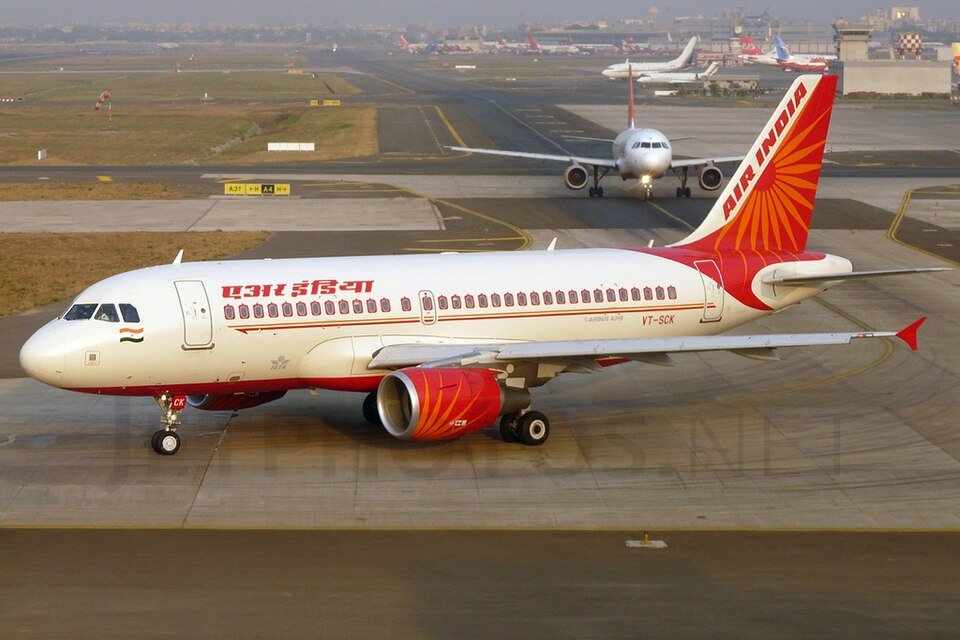
Port Blair, India: India’s Aircraft Accident Investigation Bureau (AAIB) has released its final investigation report into a serious midair proximity incident involving an Air India Airbus A319 and an Indian Navy Advanced Light Helicopter (ALH) Mk III near Port Blair airport, raising major safety concerns over coordination between civil and military aviation operations at joint-use aerodromes.
The incident occurred on February 2, 2024, at Veer Savarkar International Airport in Port Blair, a defence-operated airport that handles both military and civilian aircraft movements. The Air India aircraft, operating flight AI788 from Port Blair to Kolkata, came into close proximity with an Indian Navy ALH Mk III helicopter during departure operations, prompting an evasive manoeuvre by the helicopter crew to avoid a potential collision.
According to the AAIB final report, the Air India Airbus A319, registered VT-SCV, had departed Runway 04 after receiving clearance from Air Traffic Control, while the Navy helicopter was simultaneously conducting a training sortie in the north-east local flying area. The helicopter crew had been carrying out a localiser approach procedure when the conflict developed between the two aircraft.
Investigators stated that the approach controller allowed both aircraft to operate within conflicting airspace during a critical phase of flight, leading to rapidly reducing separation between the departing Airbus and the inbound helicopter. The helicopter subsequently received a Traffic Advisory warning from its onboard collision avoidance system, alerting the crew to the developing risk.
The Navy pilots immediately initiated a sharp right turn to avoid crossing the Airbus’ climb path. Following the evasive manoeuvre, the helicopter discontinued its approach and safely recovered back at base, while the Air India aircraft continued its climb and proceeded normally toward Kolkata.
The AAIB classified the occurrence as a “serious incident” and launched a full investigation under India’s Aircraft (Investigation of Accidents and Incidents) Rules. In its findings, the bureau concluded that the probable cause of the incident was the “inadequate assessment of the traffic situation by the approach controller,” which resulted in reduced separation and dangerous proximity between the two aircraft.
The investigation also identified communication-related concerns involving the Air India cockpit crew. According to the report, the Pilot-in-Command engaged in what investigators described as “undue conversation” with Air Traffic Control during a critical stage of flight, contributing to unnecessary radio frequency congestion. The AAIB recommended that Air India reinforce proper radio telephony discipline among its pilots.
Apart from the immediate operational factors, the report highlighted broader systemic concerns regarding aviation safety coordination between civil and military authorities in India. The bureau noted that there is currently no formal framework for regular exchange of safety-related information between the AAIB, Directorate General of Civil Aviation (DGCA), Indian Navy, Indian Air Force and Indian Army, despite repeated recommendations issued after previous military aviation investigations.
The report referenced earlier incidents involving aircraft VT-MPQ at Gwalior in 2021 and VT-PTE at Umari in 2023, where similar coordination gaps had already been identified. Investigators observed that several earlier safety recommendations remain pending implementation.
To address the risks identified during the Port Blair incident investigation, the AAIB issued multiple safety recommendations. These include establishing a formal civil-defence aviation coordination mechanism, reviewing DGCA Civil Aviation Requirements involving military aircraft and defence aerodromes, improving Air Traffic Control coordination procedures at joint-use airports, strengthening radio communication discipline and installing a secondary surveillance radar system at Port Blair to support safer traffic management as aircraft movements continue increasing in the region.
The bureau stressed that stronger integration between civilian and military aviation systems is becoming increasingly important as mixed-use airports handle higher traffic volumes and more complex operations.


![Washington, United States: A United Airlines flight bound for Guatemala City made an emergency diversion to Washington Dulles International Airport after a passenger allegedly attempted to open a cabin door at cruising altitude and assaulted another traveler, according to air traffic control communications and federal authorities. The incident involved United Airlines Flight 1551, operated by a Boeing 737 MAX 8, which departed from Newark Liberty International Airport on Thursday evening carrying 145 passengers and six crew members. The aircraft had been en route to Guatemala City when the crew declared an emergency and diverted to Washington Dulles International Airport in Virginia. According to audio between the flight crew and air traffic controllers, the pilot informed controllers that the disruptive passenger attempted to open Door 2L while the aircraft was cruising at approximately 36,000 feet. The pilot also reported that the passenger later assaulted another individual onboard. During the exchange, the tower asked the crew which door the passenger had attempted to access. The pilot responded: “Door 2L at 36,000 feet and then [the passenger] assaulted a fellow passenger.” When controllers asked whether there were any injuries onboard, the pilot replied: “Not to our knowledge.” The aircraft landed safely at Washington Dulles at approximately 8:38 p.m. local time. Law enforcement and emergency personnel met the aircraft upon arrival. The FBI later confirmed that agents responded to the incident at the airport, although the agency did not immediately release additional details regarding the passenger’s identity, possible charges, or whether the individual was taken into federal custody. Flight tracking data showed the aircraft remained airborne for a period before diverting toward the Washington region instead of continuing south toward Guatemala. The diversion temporarily disrupted the scheduled international service but no injuries among passengers or crew were officially reported. United Airlines had not issued a detailed public statement at the time of publication regarding the circumstances surrounding the diversion or the status of the passenger involved. Federal authorities are expected to review crew reports, passenger statements, and onboard evidence as part of the investigation.](https://aviationtoday.in/wp-content/uploads/2026/05/AVIATION-TODAY-UNITEDV-AIRLINES-RUDE-PASSENGER-768x432.jpg)


![Washington, United States: A United Airlines flight bound for Guatemala City made an emergency diversion to Washington Dulles International Airport after a passenger allegedly attempted to open a cabin door at cruising altitude and assaulted another traveler, according to air traffic control communications and federal authorities. The incident involved United Airlines Flight 1551, operated by a Boeing 737 MAX 8, which departed from Newark Liberty International Airport on Thursday evening carrying 145 passengers and six crew members. The aircraft had been en route to Guatemala City when the crew declared an emergency and diverted to Washington Dulles International Airport in Virginia. According to audio between the flight crew and air traffic controllers, the pilot informed controllers that the disruptive passenger attempted to open Door 2L while the aircraft was cruising at approximately 36,000 feet. The pilot also reported that the passenger later assaulted another individual onboard. During the exchange, the tower asked the crew which door the passenger had attempted to access. The pilot responded: “Door 2L at 36,000 feet and then [the passenger] assaulted a fellow passenger.” When controllers asked whether there were any injuries onboard, the pilot replied: “Not to our knowledge.” The aircraft landed safely at Washington Dulles at approximately 8:38 p.m. local time. Law enforcement and emergency personnel met the aircraft upon arrival. The FBI later confirmed that agents responded to the incident at the airport, although the agency did not immediately release additional details regarding the passenger’s identity, possible charges, or whether the individual was taken into federal custody. Flight tracking data showed the aircraft remained airborne for a period before diverting toward the Washington region instead of continuing south toward Guatemala. The diversion temporarily disrupted the scheduled international service but no injuries among passengers or crew were officially reported. United Airlines had not issued a detailed public statement at the time of publication regarding the circumstances surrounding the diversion or the status of the passenger involved. Federal authorities are expected to review crew reports, passenger statements, and onboard evidence as part of the investigation.](https://aviationtoday.in/wp-content/uploads/2026/05/AVIATION-TODAY-UNITEDV-AIRLINES-RUDE-PASSENGER-300x169.jpg)