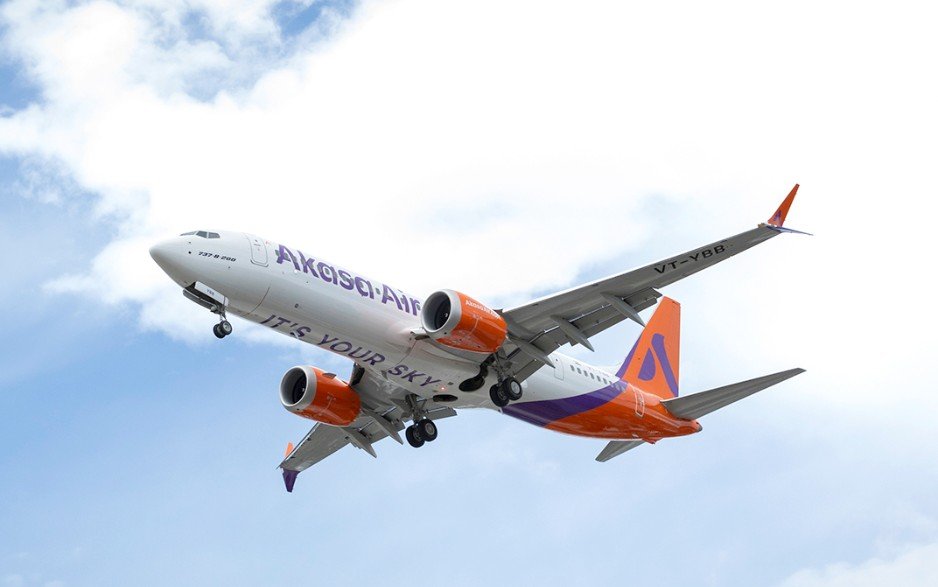
New Delhi, India: India’s aviation regulator, the Directorate General of Civil Aviation (DGCA), has flagged several regulatory and safety management lapses at Akasa Air following a routine surveillance review covering the April–September 2025 period. The authority has directed the airline to undertake corrective action after identifying “systemic failures” across multiple operational domains.
The DGCA’s findings point to irregularities in Akasa Air’s flight safety systems, crew duty-time compliance, and internal safety audits. The regulator reportedly observed repetitive procedural lapses and documentation gaps, including delayed closure of internal audit findings and incomplete reviews of cockpit voice and flight data recorder (CVR/FDR) analyses.
The regulator also highlighted discrepancies in the alignment of Akasa Air’s Safety Management System (SMS) manual with departmental manuals governing flight operations and engineering. In addition, not all employees had completed mandatory fatigue management training, which forms a critical component of the DGCA’s flight safety oversight framework.
Akasa Air, a Mumbai-based Indian airline that launched commercial operations in August 2022. It was founded by Vinay Dube and Aditya Ghosh, with substantial backing from renowned investor Rakesh Jhunjhunwala. The airline began operations on August 7, 2022, with its first flight between Mumbai and Ahmedabad, using a Boeing 737 MAX 8 aircraft. The latest regulatory scrutiny comes as the airline continues its network expansion across domestic routes and prepares for future international growth.
In its official response, Akasa Air confirmed that it had submitted detailed explanations and corrective action reports to the DGCA within prescribed timelines. The airline said it remains fully committed to maintaining “the highest levels of operational and safety excellence in line with all regulatory requirements.” Akasa also stressed that such surveillance audits are routine across all scheduled airlines and form part of ongoing safety oversight.
While the DGCA has not announced any immediate punitive action, the findings reportedly include Level-II safety observations, a category indicating recurring compliance concerns that warrant close monitoring and formal corrective plans. The regulator has sought a comprehensive Corrective Action Plan (CAP) from the airline, including root cause analyses and steps to prevent recurrence.